Loved your visit? Leave a Google Review ⭐
logo
Schedule Now
Self Pay Surgery
512-960-4590
  • About Practice
    • Testimonials
  • Providers
    • Sean M Gallagher, MD
    • Benjamin P Amis, MD
    • O. Alton Barron, MD
  • Patient Portal
  • Services
    • Dr. Amis
      • Hand Surgery in Austin, TX — Dr. Benjamin Amis | ATX Orthopedics
      • Tendon Repair
      • Trigger Fingers
      • Shoulder Replacement
      • Arthritis Treatment
      • Carpal Tunnel Release Surgery in Austin, TX — Dr. Benjamin Amis | ATX Orthopedics
      • Rotator Cuff Repair
      • Shoulder Surgery
      • Fractures
    • Dr. Gallagher
      • Hip Replacement
      • Knee Replacement
      • Knee
      • Shoulder
      • Hip Problems
      • ACL Reconstruction Specialist in Austin, TX — ATX Orthopedics
      • Revision Joint Replacement
      • Foot & Ankle Fractures
  • Insurance
  • Contact Us
  • Self Pay
  • Surgical Bundles
  • FAQs
  • Blog
  • Menu Menu
Side-lying leg raise exercise for gluteus medius strengthening

Hip Home Exercise Program in Austin, TX – ATX Orthopedics

April 8, 2020/in Blog

This hip home exercise program from ATX Orthopedics in Austin, TX is designed to help patients rebuild hip strength, flexibility, and stability after hip replacement or hip surgery with Dr. Sean Gallagher.

If you are recovering from hip replacement surgery in Austin, TX, your post-operative home exercise program is one of the most important steps toward a safe, successful recovery. Dr. Sean Gallagher and the ATX Orthopedics care team have designed this hip home exercise program to help patients in Austin, Round Rock, Cedar Park, and the surrounding Central Texas area rebuild strength, restore range of motion, and return to daily activities as smoothly as possible. Follow these exercises as directed — consistency is key to an optimal outcome.

4x per day, sets of 10-15.  PHONE ALARM reminder recommended.

GLUTEUS MEDIUS STRENGTHENING – 45 degree HIP ABDUCTION STRENGTHENING STANDING or SIDE LYING
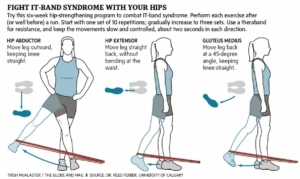
indexitband

Theraband not needed until able to do 15 with ease.

FORM IS IMPORTANT when standing – must keep torso and pelvis level
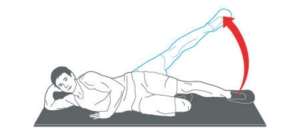
Gluteus Medius 2Leg Should be directed back at a 45deg angle


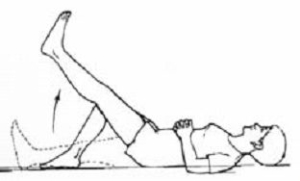
HIP FLEXOR STRENGTHENING – STRAIGHT LEG RAISES (SLRs) SEATED OR LYING
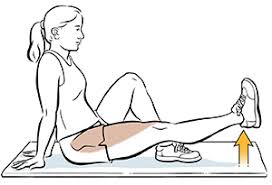
image3image4

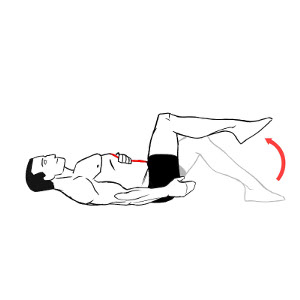
BENT KNEE HIP FLEXOR STRENGTHENING sitting or lying
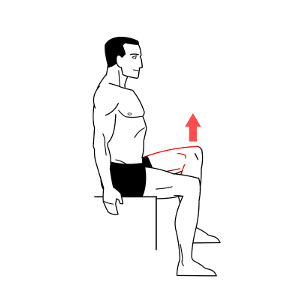
image5 image6

Also, please look at videos by Bob and Brad: https://www.bobandbrad.com/total-hip-replacement-program

Ready to schedule your follow-up or have questions about your hip recovery? Learn more about hip replacement at ATX Orthopedics or call us at (512) 960-4590 to speak with our Austin orthopedic care team.

Why Hip Rehabilitation at Home Makes a Difference

Total hip replacement is one of the most successful orthopedic procedures performed today, with outstanding long-term outcomes for the vast majority of patients. However, the ultimate result depends not only on the surgical technique but also on how diligently you engage in your post-operative rehabilitation. The hip abductor muscles — particularly the gluteus medius and gluteus minimus — are the key stabilizers of the pelvis during walking, stair climbing, and transitioning from sitting to standing. After hip replacement surgery, these muscles often lose strength due to the surgical approach, post-operative swelling, and reduced activity. Rebuilding them through a consistent home exercise program is essential to restoring a smooth, pain-free gait and preventing long-term compensatory problems.

The Role of the Gluteus Medius in Hip Recovery

The gluteus medius muscle sits on the outer surface of the pelvis and is the primary muscle responsible for keeping the pelvis level when you stand on one leg (as you do with every step you take when walking). After hip replacement, weakness of the gluteus medius is the most common cause of a Trendelenburg gait — a characteristic side-to-side “waddling” motion where the pelvis drops toward the non-stance side with each step. This is not merely cosmetic; it places abnormal stress on the back, the hip implant, and the opposite knee. The hip abduction exercises in your program — both lying on your side and standing — are specifically designed to target and rebuild gluteus medius strength.

Form and Technique Are Critical

With standing hip abduction exercises, maintaining proper form is essential. As noted in your exercise program, you must avoid compensating by leaning or “hiking” your pelvis — keep your trunk upright and let only your hip do the work. Using a resistance band (theraband) adds progressive load but should only be introduced once you can perform 15 repetitions with excellent form without resistance. Starting too aggressively or with poor form can activate the wrong muscle groups and delay your recovery. If you are unsure about your technique, ask our team to review your form at your next post-operative visit.

Progressing Your Program Over Time

In the early weeks after surgery, focus on performing the exercises gently and consistently, prioritizing form over resistance or repetitions. As you approach four to six weeks post-operatively, you should begin to notice that the exercises feel easier and your walking is improving. This is the time to begin adding resistance bands and progressing toward more functional activities such as step-ups, mini-squats, and eventually walking on varied terrain. Your progress will be reviewed at follow-up appointments with Dr. Gallagher, and your program will be advanced based on your healing and functional milestones.

Questions and Follow-Up

If you experience new hip pain, groin pain, increased swelling, or a sensation of instability during your exercises, stop and contact ATX Orthopedics at 512-960-4590. These symptoms may indicate a need for evaluation and should not be ignored. For patients recovering from hip replacement in Austin, Round Rock, Cedar Park, Georgetown, and the surrounding Central Texas region, our team is available to answer questions and provide guidance throughout your recovery journey. We want to ensure you achieve the full, lasting benefit that hip replacement surgery can provide.

Related Articles & Resources

  • hip bursitis
  • total hip replacement guide
  • hip care at ATX Orthopedics

Written by

Dr. Sean M. Gallagher, MD

Orthopedic Surgeon | Hip & Knee Specialist

Dr. Sean Gallagher is a board-eligible orthopedic surgeon specializing in hip and knee replacement, ACL reconstruction, and sports medicine. He performs the majority of surgeries at Pinnacle Surgery Center of Austin. View full bio →

Tags: Austin TX, Dr. Gallagher, hip home exercise, hip replacement, hip replacement Austin, hip replacement recovery
Share this entry
  • Share on Facebook
  • Share on X
  • Share on WhatsApp
  • Share on Pinterest
  • Share on LinkedIn
  • Share on Reddit
  • Share by Mail
You might also like
Pinnacle Surgery Center of Austin logo — physician-owned ambulatory surgery center in Austin, Texas Pinnacle Surgery Center of Austin
Texas State Capitol building in Austin TX New Texas Insurance Laws: Why “Out-of-Network” Doesn’t Mean “Out-of-Pocket”
Ankle anatomy diagram for ankle exercise program Ankle Home Exercise Program in Austin, TX – ATX Orthopedics
superior-hip-replacement SuperPATH Hip Replacement in Austin, TX: Superior Approach Total Hip Arthroplasty – ATX Orthopedics
Shoulder joint anatomy diagram showing rotator cuff and bones Shoulder Pain in Austin, TX: Causes, Diagnosis & Treatment – ATX Orthopedics
United States Capitol building representing federal No Surprises Act Your Rights and Protections Against Surprise Medical Bills
Knee anatomy diagram showing ACL and knee ligaments Remnant-Sparing ACL Reconstruction in Austin, TX: Why Preserving the Native Ligament Changes Everything
Straight leg raise exercise for knee strengthening after knee replacement Knee Home Exercise Program in Austin, TX – ATX Orthopedics

Recent Posts

  • Shoulder Surgery in Austin, TX — Dr. Benjamin Amis | ATX Orthopedics
  • Hand and Wrist Fractures in Austin, TX — Expert Care from Dr. Benjamin Amis | ATX Orthopedics
  • Ganglion Cysts of the Hand and Wrist in Austin, TX — ATX Orthopedics
  • Dupuytren’s Contracture in Austin, TX — Symptoms, Treatment & Surgery | ATX Orthopedics
  • Trigger Finger in Austin, TX — Causes, Symptoms & Treatment | ATX Orthopedics

Contact Us to Schedule an Appointment

512-960-4590

Contact Us
Address
Address
City
State/Province
Zip/Postal
*
Last updated on April 29th, 2026

Office Info

ATX Orthopedics
3901 Medical Parkway Suite 301
Austin, TX 78756


(512) 960-4590

Navigation

  • Privacy Policy
  • Terms & Conditions
  • Contact Us
  • Services
  • Providers
  • Google Reviews
  • Healthgrades
© Copyright 2026 - ATX Orthopedics
  • Link to Facebook
  • Link to Yelp
Link to: Hand and Physical Therapy List Link to: Hand and Physical Therapy List Hand and Physical Therapy List Link to: Iovera Cryoablasion Therapy for Knee Pain Link to: Iovera Cryoablasion Therapy for Knee Pain Ultrasound-guided injection showing needle on anterior thighIovera Cryoablasion Therapy for Knee Pain
Scroll to top Scroll to top Scroll to top