ACL Reconstruction Surgery in Austin, TX | ATX Orthopedics
ACL Reconstruction Specialist in Austin, TX — Dr. Sean Gallagher
Dr. Sean Gallagher, MD is a fellowship-trained orthopedic surgeon at ATX Orthopedics in Austin, TX, specializing in ACL reconstruction for patients of all activity levels. Dr. Gallagher’s preferred technique — remnant-sparing ACL reconstruction using allograft tissue — preserves the patient’s native ligament remnant and offers meaningful biological advantages over traditional autograft approaches in appropriately selected patients. Most ACL reconstructions are performed as same-day outpatient procedures at Pinnacle Surgery Center of Austin, Central Texas’s only truly independent, physician-owned ambulatory surgery center.
What Is ACL Reconstruction?
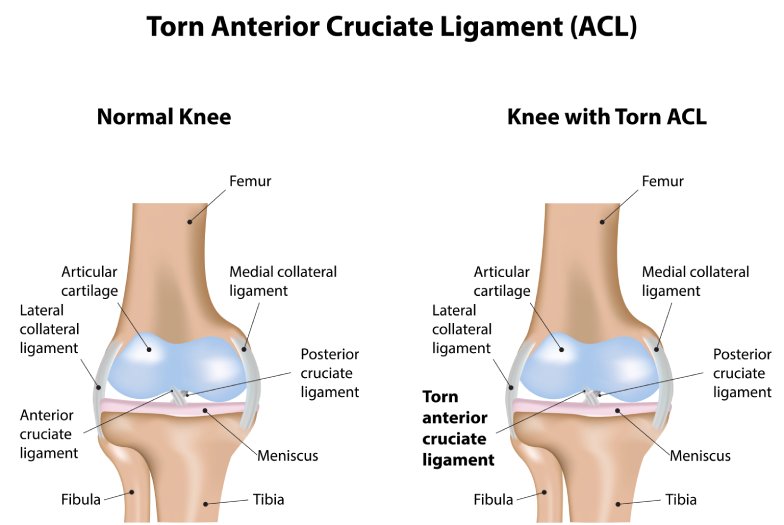
The anterior cruciate ligament (ACL) is one of the primary stabilizing ligaments of the knee. ACL tears are among the most common sports injuries and can cause significant knee instability, pain, and a high risk of secondary meniscus damage if left untreated in active patients. ACL reconstruction replaces the torn ligament with a tendon graft, restoring knee stability and allowing patients to return to sport and normal activity.
ACL reconstruction can address:
- Complete or near-complete ACL tears causing knee instability
- ACL tears combined with meniscus injury
- Chronic ACL deficiency with recurrent giving-way episodes
- ACL tears in active patients who wish to return to sport or physical work
- Failed prior ACL reconstruction (revision cases)
Remnant-Sparing ACL Reconstruction — Dr. Gallagher’s Approach
Traditional ACL reconstruction removes all remnant tissue of the torn native ligament before drilling tunnels and passing the graft. Dr. Gallagher takes a more biologically sophisticated approach: remnant-sparing technique, in which viable native ACL tissue is intentionally preserved during the procedure.
The ACL remnant is not simply scar tissue. It contains proprioceptive nerve fibers — the sensory receptors that help your brain sense knee position — and retains a biological scaffold that can promote graft incorporation and healing. Preserving this tissue has been associated with improved proprioception, better graft vascularization, and enhanced long-term functional outcomes in published research.
Why Allograft? The Case Against Unnecessary Autograft Harvest
In autograft ACL reconstruction, tissue is harvested from the patient’s own body — typically the patellar tendon or hamstring tendons. While autograft has a long track record, harvest comes at a cost: donor site pain, quadriceps or hamstring weakness during recovery, and additional incisions. In patients who have well-matched allograft available and meet appropriate criteria, Dr. Gallagher believes the harvest morbidity of autograft is an unnecessary tradeoff.
Modern allograft tissue — processed with rigorous sterility and strength standards — is highly reliable for ACL reconstruction in appropriately selected patients. Dr. Gallagher utilizes allograft tissue to allow precise graft sizing, eliminate donor site complications, and simplify the recovery process, without compromising outcomes for the right patient population.
Autograft remains an appropriate and preferred choice in certain cases — including revision surgery, high-level adolescent athletes, and specific clinical scenarios — and Dr. Gallagher tailors graft selection to each individual patient’s anatomy, activity level, and goals.
The Procedure
ACL reconstruction at ATX Orthopedics is performed arthroscopically through small incisions, using a tiny camera to visualize the knee joint. The procedure involves removing the torn ACL, preparing bone tunnels in the tibia and femur, and precisely passing and securing the new graft in anatomic position. Dr. Gallagher’s remnant-sparing technique modifies this sequence to protect viable native tissue throughout. The procedure is typically performed under regional anesthesia (nerve block) with sedation, and most patients are discharged the same day from Pinnacle Surgery Center of Austin.
What to Expect After Surgery
Recovery after ACL reconstruction follows a structured, phase-based rehabilitation protocol. Most patients can expect to bear weight immediately with the assistance of crutches, begin active range-of-motion exercises within days of surgery, and progress through strengthening and sport-specific training over a 6–9 month timeline. Dr. Gallagher’s detailed rehabilitation protocol is available at ACL Reconstruction Rehab Protocol — ATX Orthopedics Austin, TX.
A Different Kind of Orthopedic Practice
ATX Orthopedics is built on a deliberate choice: we do not employ nurse practitioners or physician assistants to drive patient volume. Every visit, every decision, and every surgery is handled directly by your surgeon — not a mid-level provider. This means our clinic is genuinely accessible, our surgical schedule is not booked out for months, and you are never passed off to someone other than the doctor you came to see. We believe this is how medicine should be practiced, and it is the standard of care our patients deserve.
- Knee Replacement in Austin, TX — Learn about total and partial knee replacement options at ATX Orthopedics.
- Knee Services Overview — All knee conditions and treatments offered at ATX Orthopedics.
- ACL Reconstruction Rehab Protocol — Phase-by-phase recovery guidelines for patients after ACL surgery.
ACL Surgery Cost in Austin, TX — Pricing & Insurance Guide
One of the most searched questions by Austin athletes and active adults facing ACL surgery is: “How much does ACL surgery cost?” The answer depends on whether you use insurance or self-pay — and at ATX Orthopedics, we give you both options upfront.
Self-Pay ACL Surgery in Austin: Our all-inclusive self-pay bundle for ACL reconstruction using allograft tissue is $15,500. This covers the surgeon fee, Pinnacle Surgery Center facility fee, allograft tissue, anesthesiologist, and 90 days of post-operative follow-up care. No hidden fees. View our full surgical bundle pricing.
Using Insurance for ACL Surgery: ATX Orthopedics accepts Aetna, Anthem BCBS, Cigna, and UnitedHealthcare. For Texas-regulated plans (look for the TDI or DOI logo on your card), out-of-network charges are applied toward your in-network deductible under HB 3359. We provide a Good Faith Estimate before scheduling so you know your cost in advance. Contact us about your coverage.
Is self-pay cheaper than insurance for ACL surgery in Austin? For patients with high-deductible health plans — common in Austin’s tech and startup workforce — self-pay is often less expensive than going through insurance at a hospital. At a hospital system, your $15,500 procedure may trigger your full deductible plus co-insurance charges on the facility and anesthesia separately. Our bundle includes everything at one flat price. Read our FAQ on self-pay vs. insurance.
Why Austin Athletes Choose ATX Orthopedics for ACL Surgery
Austin is an active city — hikers on the Barton Creek Greenbelt, soccer players at Austin FC training camps, runners in the Keep Austin Weird half marathon, and high school athletes across Cedar Park, Round Rock, Pflugerville, and Westlake. ACL tears are common. Choosing the right surgeon matters for your return to sport.
At ATX Orthopedics, Dr. Sean Gallagher performs all ACL surgeries himself — you will never have a resident or physician assistant handling your surgery. The procedure is performed at Pinnacle Surgery Center of Austin as same-day outpatient surgery, meaning you go home the day of surgery. Most Austin patients return to light activity at 4–6 weeks and full sport at 9–12 months.
Frequently Asked Questions: ACL Surgery in Austin, TX
How long is recovery from ACL surgery in Austin?
Most patients undergoing ACL reconstruction at ATX Orthopedics are weight-bearing the same day and go home from Pinnacle Surgery Center within a few hours. Return to driving is typically 1–2 weeks. Return to light exercise is 4–6 weeks. Full return to cutting sports — soccer, basketball, football — is typically 9–12 months with proper physical therapy. Dr. Gallagher coordinates rehabilitation with Austin-area physical therapy providers.
What type of graft does Dr. Gallagher use for ACL reconstruction?
Dr. Gallagher uses allograft tissue (donor tissue) for most ACL reconstructions. Allograft avoids harvest-site morbidity, meaning you don’t have a second incision site to heal. He uses a remnant-sparing technique when possible, which preserves the remaining ACL tissue to promote better healing and proprioception. This approach is well-suited for Austin’s active adult population returning to recreational and competitive sports.
Can I get ACL surgery without waiting months for an appointment in Austin?
Yes. Unlike large Austin hospital systems where surgical scheduling can stretch 2–4 months, ATX Orthopedics typically sees new patients within days to weeks. We do not use mid-level providers to triage patients — you speak directly with Dr. Gallagher from the first consultation. Schedule your consultation today.