Shoulder Replacement Surgery in Austin, TX | Dr. Benjamin Amis

Shoulder Replacement with Dr. Ben Amis, MD — ATX Orthopedics Austin, TX

Dr. Benjamin Amis is Austin’s shoulder specialist, performing total shoulder replacement, reverse shoulder replacement, and partial (resurfacing) shoulder replacement at Pinnacle Surgery Center of Austin — the city’s only independent, physician-owned ambulatory surgery center. Most shoulder replacements are performed as same-day outpatient procedures, with patients going home hours after surgery.

What Is Shoulder Replacement Surgery?

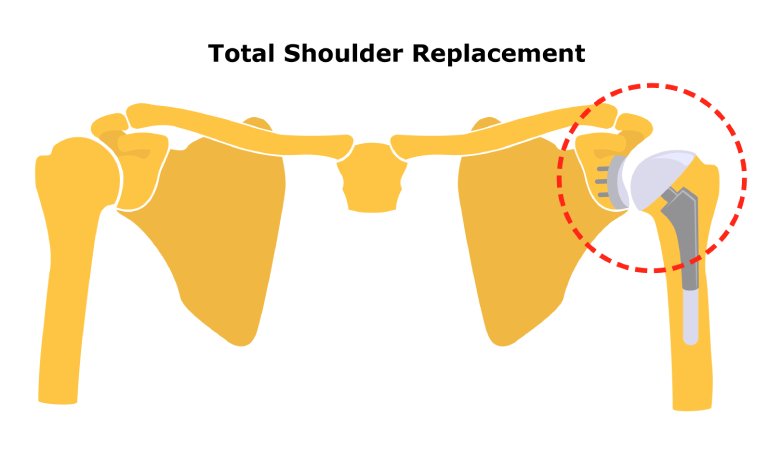
Shoulder replacement (shoulder arthroplasty) is an operation that removes damaged bone and cartilage from the glenohumeral joint — the ball-and-socket joint formed by the humeral head and glenoid — and replaces them with a prosthetic implant. The procedure relieves chronic shoulder pain, restores range of motion, and dramatically improves patients’ ability to perform daily activities such as reaching overhead, lifting, dressing, and sleeping comfortably.

ATX Orthopedics uses the latest generation of implants paired with minimally invasive techniques, reducing soft-tissue disruption and accelerating recovery. Dr. Amis will recommend the most appropriate implant type based on your anatomy, diagnosis, bone quality, and activity goals.

Types of Shoulder Replacement Performed by Dr. Amis

Total Shoulder Replacement (Anatomic Arthroplasty): The humeral head (ball) is replaced with a metal stem and ball, and the glenoid (socket) is resurfaced with a high-density polyethylene component. Total shoulder replacement is most appropriate for patients with primary glenohumeral osteoarthritis and an intact rotator cuff.

Reverse Total Shoulder Replacement: In a reverse prosthesis, the ball and socket positions are switched — a metal ball is fixed to the glenoid and a plastic socket is attached to the humerus. This configuration relies on the deltoid muscle rather than the rotator cuff to power the joint, making it the preferred option for patients with rotator cuff arthropathy (arthritis combined with an irreparable rotator cuff tear), failed prior shoulder replacement, or complex fractures. Reverse shoulder replacement is now one of the most commonly performed shoulder procedures in the U.S. and produces excellent long-term outcomes.

Partial Shoulder Replacement (Hemiarthroplasty / Resurfacing): Only the humeral head is replaced while the native glenoid is preserved. Resurfacing implants conserve maximum bone stock and are an excellent option for younger, active patients with isolated humeral head damage, avascular necrosis of the humeral head, or specific fracture patterns.

Conditions Treated With Shoulder Replacement

Shoulder replacement surgery is indicated for patients with severe shoulder pain and disability caused by conditions including glenohumeral osteoarthritis, rheumatoid arthritis, post-traumatic arthritis, avascular (osteonecrosis) of the humeral head, rotator cuff arthropathy, severe proximal humerus fractures in older adults, and failed prior shoulder procedures including prior rotator cuff repair or prior hemiarthroplasty.

What to Expect: Recovery After Shoulder Replacement

Most patients notice a dramatic reduction in pain immediately after surgery. A comprehensive recovery timeline typically follows this pattern:

Days 1–3: Discharged the same day or the morning after surgery. The arm is placed in a sling. Ice, elevation, and prescribed medications manage swelling and discomfort.

Weeks 2–6: Gentle passive range-of-motion exercises begin with a physical therapist. Driving is restricted; light activities with the non-operative arm are permitted.

Months 2–3: Active-assisted and active exercises are introduced. Most patients can perform activities of daily living independently by this stage.

Months 4–6: Strengthening exercises advance and functional range of motion continues to improve. Many patients return to golf, swimming, and recreational activities.

1 Year: Full recovery with a well-functioning implant. Patients typically report outcomes lasting 15–20+ years with modern implants.

Am I a Candidate for Shoulder Replacement?

You may be a candidate for shoulder replacement if you have persistent shoulder pain that limits your daily activities and sleep, your shoulder X-rays show significant joint damage or loss of cartilage, conservative treatments — including physical therapy, anti-inflammatory medications, and cortisone injections — have not provided lasting relief, and your overall health is sufficient to tolerate an elective surgery. During your consultation, Dr. Amis will review your imaging, assess your shoulder function, and discuss whether replacement, arthroscopic surgery, or continued non-surgical management is the right path forward.

Shoulder Replacement at Pinnacle Surgery Center — Austin’s Cost-Effective Alternative

Dr. Amis performs shoulder replacement at Pinnacle Surgery Center of Austin, a physician-owned ambulatory surgery center located in central Austin near the Medical District, off 38th Street. Compared to hospital-based shoulder replacement, outpatient surgery at Pinnacle typically costs 40–60% less — with no hospital facility fees. ATX Orthopedics also offers transparent self-pay pricing and works with patients on direct-to-employer and self-pay arrangements.

Related Articles

  • Rotator Cuff Repair — Learn about rotator cuff tear repair and what recovery looks like after surgery with Dr. Gallagher in Austin, TX.
  • Hip Replacement Surgery — Same-day outpatient hip replacement in Austin with Dr. Sean Gallagher using minimally invasive techniques.

A Different Kind of Orthopedic Practice

ATX Orthopedics is built on a deliberate choice: we do not employ nurse practitioners or physician assistants to drive patient volume. Every visit, every decision, and every surgery is handled directly by your surgeon — not a mid-level provider. This means our clinic is genuinely accessible, our surgical schedule is not booked out for months, and you are never passed off to someone other than the doctor you came to see. We believe this is how medicine should be practiced, and it is the standard of care our patients deserve.